

Lapalingo App in Everyday Casino Life
This overview shows adult players in Germany how Lapalingo works on mobile in everyday life for payments, limits, and support


Bonuses & Promotions
100% up to 500€
+ 200 Free Spins

55% up to 150€
+ 100 Free Spins

50% up to 500€

Up to 25%
Every Monday

Table of Contents
About Lapalingo
| License | MGA / Curaçao |
|---|---|
| Games | 2,000+ |
| Min. Deposit | $10 |
| Withdrawal | 24–72 hours |
| Support | 24/7 Live Chat |
Game Providers








Mobile Use Between Daily Life and Routine
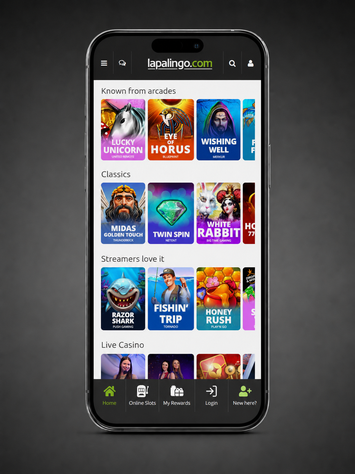
Anyone who opens a casino on their phone or tablet today doesn't expect a long detour. They want to log in, see their account balance, find a suitable category, and decide at their leisure whether there's really enough time for a session. This is exactly where a usable platform separates itself from one that just makes a lot of noise.
Imagine you're sitting on a train, have twelve minutes, and don't want to go through five menus first. Many players act very pragmatically in such a situation: first check history, then open a familiar section, then reconsider. A good mobile environment helps with this because it supports the process instead of creating new distractions.
How Lapalingo Mobile Works in Everyday Life
On a smaller screen, every unnecessary step feels twice as difficult. What looks like a minor issue on desktop can immediately slow things down on a smartphone. That's why mobile usage doesn't work well when everything is simply shrunk down, but when the platform sets real priorities: account, game search, cashier, limits, and help must be directly accessible.
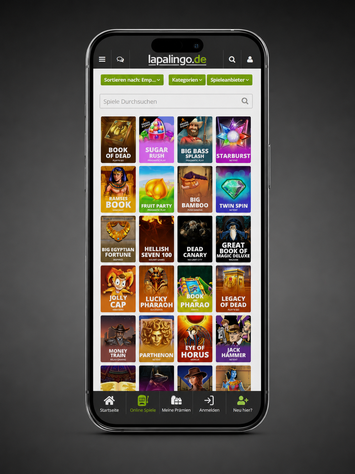
Imagine you open the platform after work for just a short round. Most of the time, players don't want to study a long selection, but rather quickly return to a familiar area. If recently used content, saved favorites, and account access are clearly visible, the session remains calm. If this is missing, even the start becomes unnecessarily hectic.
A second point is usability when switching between multiple devices. Many adult users start a short round on their phone and later check their history or a withdrawal on their tablet. This only works smoothly if the menus are similarly logical on both devices. So, the interface doesn't have to look identical, but the same core paths should remain reliable.
Where Small Displays Change the Game Rhythm
Small displays not only change the view, but often also the behavior. Players click faster, read less, and react more spontaneously to stimuli. Therefore, it's worth setting a fixed framework before each session: How much time is available, what budget fits, and at what point will the round end? Those who clarify this beforehand have to improvise less during the session.
Imagine a typical evening situation: you actually just want to take a quick look and after a few minutes you realize that you are already jumping from one area to another. That's exactly when it becomes clear how much the interface influences the rhythm. A clear structure slows down this jumping, a restless structure intensifies it.
Which paths players really use often
In everyday life, the same paths are always needed. First comes the login, then the view of balance and history, then the game selection, and eventually the cashier or help. Anything that unnecessarily lengthens this chain costs concentration. This sounds trivial, but it is crucial in mobile sessions.
If you only have twenty minutes, you don't want to think about where the payout overview is hidden or how to set a break. Players usually appreciate platforms that treat such tools as tools - direct, sober, without theatrics. That's exactly what makes the difference between entertainment and disorder.
Popular Games










Registration, Access, and Initial Security Steps

Before playing at all, the account sets the tone for the entire experience. Register cleanly, keep data consistent, choose a password consciously, and find the security features right at the beginning - this is not a side issue, but the basis of every calm session. Many problems arise not in the game selection, but beforehand, because the entry was handled too quickly.
Imagine you set up the account on the go and want to continue directly in the evening. Then it immediately shows whether everything is properly prepared. Adults in Germany should not only think about access, but also about how they will find limits, breaks, and account overview later.
A sensible first step is to view the personal settings immediately after registration. Where is the history displayed? How can time interruptions be set? Is there a clear overview of deposits and withdrawals? These questions seem dry, but they save the nerves later that are easily lost during a session.
Why Limits Are More Practical Before the First Bet
Many users only set restrictions when the first round is already underway. The opposite is more practical. If you define an amount, an approximate duration, and a clear exit point before starting, you play with significantly less internal pressure. The most common everyday scene is this: You start casually, actually want to stop early, and only after several rounds do you realize that no real limit has been set anywhere.
This is precisely why limits belong at the beginning and not at the end. They don't take the excitement out of the session, but rather give it form. Those who want to pause or exit completely later will then already find a clear path instead of having to search in a hurry.
Payments, Account Balance, and Transactions at a Glance
Once money comes into play, the view of the platform changes. Colors, banners, and large areas suddenly become secondary. What matters then is order, readability, and trust in the process. Where do I enter the amount? How do I know if the step was successful? Where do I see what is already being processed? These questions must be answered just as clearly on mobile as on a larger screen.
Imagine you deposit a small amount after work and want to check later that evening what is still pending. Then, clean cash register logic is crucial. Anyone who first has to open several sub-items quickly loses the overview – and with it, their calm.
Especially during short sessions, the account balance is not a detail but a pace-setter. Many players look at the overview too infrequently and then only react to individual game moments. It is more sensible to check after clear sections: before starting, after a completed phase, and before any money movement. This way, the account remains a control point and does not merely become a number on the edge.
Section | What players check there | Why it helps in everyday life |
Balance | Current status before and after a session | The overview remains, even with short rounds |
Cashier menu | Deposit and withdrawal methods as well as status information | Money movements are traceable instead of diffuse |
History | Previous steps and open processes | Helps to avoid errors and double actions |
Protection features | Pauses, limits, and locks | Decisions can be secured before the next impulse |
Deposits and withdrawals should never be treated as mere technique. In practice, they control the pace of the entire experience. Those who set an amount calmly, then play consciously, and later check the history, usually use the platform more orderly than someone who switches back and forth between the game and the cashier without a break.
How players calmly prepare deposits
A good deposit doesn't start with the amount field, but with a brief preliminary decision. What is the budget today? How long should the session be? And should money be moved again after this round? If you decide this beforehand, the actual step becomes surprisingly easy.
Imagine you only want a manageable evening round and no open chain of follow-up payments. Many adult players do well by setting the amount once and consciously leaving the cashier afterwards. This keeps the focus on the game plan and not on spontaneous reactions.
What Is Usually Overlooked During Withdrawals
Payouts are rarely just about speed. It is often more important that the process is clearly visible and does not cause uncertainty. Players want to know if a step has already been registered, if something is still being checked, and if the profile data is consistent. If this clarity is missing, the feeling quickly arises that one has to keep checking.
Imagine you request a payout on a tablet and later check the status on your smartphone. Then consistency counts. The overview should show the same information, not detailed on one device and vague on the other. Especially in mobile everyday life, this uniformity builds trust.
Why Clean Profile Data Saves Time Later
Many frictions can be avoided with a simple rule: maintain account data calmly and consistently. Those who keep names, contact details, or payment details unclear in between often only notice the consequences when money moves. Then a small oversight becomes a real disruptive factor.
When you create your account, a quick second look is therefore worthwhile. Do the details, spelling, and order match? Typically, this exact minute saves significantly more time later than it costs at the beginning.
Game Selection, Categories, and Daily Planning
Not every session requires the same selection. Sometimes you just want to open a familiar area, sometimes you want to specifically test new content, sometimes you want to calmly compare what suits your mood. A good platform recognizes this difference indirectly – through clear filters, through understandable categories, and through return paths that do not have to be constantly relearned.
Imagine you come home late, are tired, and don't want to spend half an hour searching. Many players then first open recently used content or stick to a familiar corner of the offer. This is not a lack of curiosity, but often a form of self-control: fewer stimuli, less switching, calmer decisions.
Daily planning belongs in here too. Those who know in advance whether they are aiming for a short or longer session will choose differently. With a tight time window, clear favorites and a calm start help. With more time, the selection can be broader – but even then, a fixed order makes sense: browse first, then decide, then play.
What the Lapalingo Android App Changes During Onboarding
On Android devices, many players pay particular attention to directness. Entry should work without detours, touch fields must react cleanly, and the account should not disappear into too many levels. What still seems generous on a larger device can quickly look like friction here.
Imagine you unlock your device on the go, open the platform, and want to be in the right area in less than a minute. This usually only succeeds if the interface consistently prioritizes. Start, search, account, and cashier must be accessible without having to read for a long time or jump back.
At the same time, Android not only changes the operation, but often also the expectation. Many users want short, clearly defined sessions there instead of long exploration. Therefore, it makes sense to view app usage more like a tool: open briefly, check consciously, act purposefully, and close again. This attitude fits better in mobile everyday life than an open, permanent window.
How Android Users Better Control Short Sessions
Short sessions on Android benefit from fixed rituals. First check your balance, then set a time limit, then choose exactly one area. If you switch between several categories after just a few minutes, it's often a sign that the session has no framework. Players are usually more successful when they consciously keep the sequence simple.
Imagine you're using a waiting time between two appointments. In this case, it's not the biggest offer that's crucial, but the ability to disengage according to a clear plan. This is precisely why short rituals are so useful – they reduce spontaneity where it's most likely to lead to problems.
Support, Breaks, and Sensible Exits
Support is often only sought when trouble has already occurred. A different perspective is more sensible: help, breaks, and protective functions should be part of normal use from the beginning. Those who know where to make an inquiry and how to set a break use the platform more calmly.
Imagine, in the middle of a mobile session, something doesn't fit – a financial step is unclear, the history seems contradictory, or you simply notice that your concentration is gone. In such moments, a break usually does more good than trying to quickly continue. Adult players often act best when they don't react to the last impulse but briefly interrupt the process.
A sensible exit is not a sign of weakness. On the contrary: it shows that the session is controlled by the player and not the other way around. Those who notice fatigue, frustration, or the search for excitement increasing should not persuade themselves to continue, but should end or pause. This is exactly where entertainment becomes a controlled part of everyday life again.
FAQ
The best way to start is with a fixed sequence. First, you check your balance and history, then you set the time and budget for the session, and only then do you open an area of the offer. Many players reverse this sequence and only realize in the middle of use that no clear limit has been set. Especially on mobile, a calm start helps because small displays favor spontaneous decisions more strongly.
You rarely recognize a good mobile interface by large images, but by small pathways. Important areas like account, cashier, help, and protective functions must be accessible without searching. If you immediately understand where history, payments, and exit options are during brief use, that's a good sign. However, if you have to jump back multiple times or test submenus, the platform costs unnecessary energy even before the first round.
Yes, in practice, this is usually the most sensible solution. Those who set restrictions at the beginning play later with less pressure and don't have to search for suitable tools in the middle of a session. Think of a typical everyday situation: the round is already running, the focus is on the game, and precisely then a limit is to be set. Doing it beforehand is easier, clearer, and often more effective.
A calm, consistent process helps the most. First, check the account details, then decide on the amount or the desired step, and then check the status in the history. Many frictions arise because players switch between the cashier and the game too often during a session. Those who separate these areas and treat financial transactions as a separate step find it much easier to maintain an overview.
A break is usually sensible when the focus is no longer on the game itself, but on the desire to correct a feeling – such as frustration, fatigue, or the need to quickly compensate for something. In such moments, the decision is often worse, not better. A short interruption or a clearly set timeout then helps more than any additional round, because it creates distance between impulse and action again.
Yes, if you remain conscious while doing so. Many adult users play briefly on their smartphone and later check history, account, or a financial transaction on their tablet. This switch is particularly useful when both devices are not used for the same task. The smaller display is often better suited for short, limited sessions, while the larger one is better for overview, planning, and control.
It's best to be brief, specific, and without subordinate clauses. Write what happened, on which device it occurred, when it happened, and what you have already checked. Usually, that's all that's needed. Players often get useful answers faster when they specify the exact moment instead of adding many speculations. This keeps the request understandable and the next step clear.